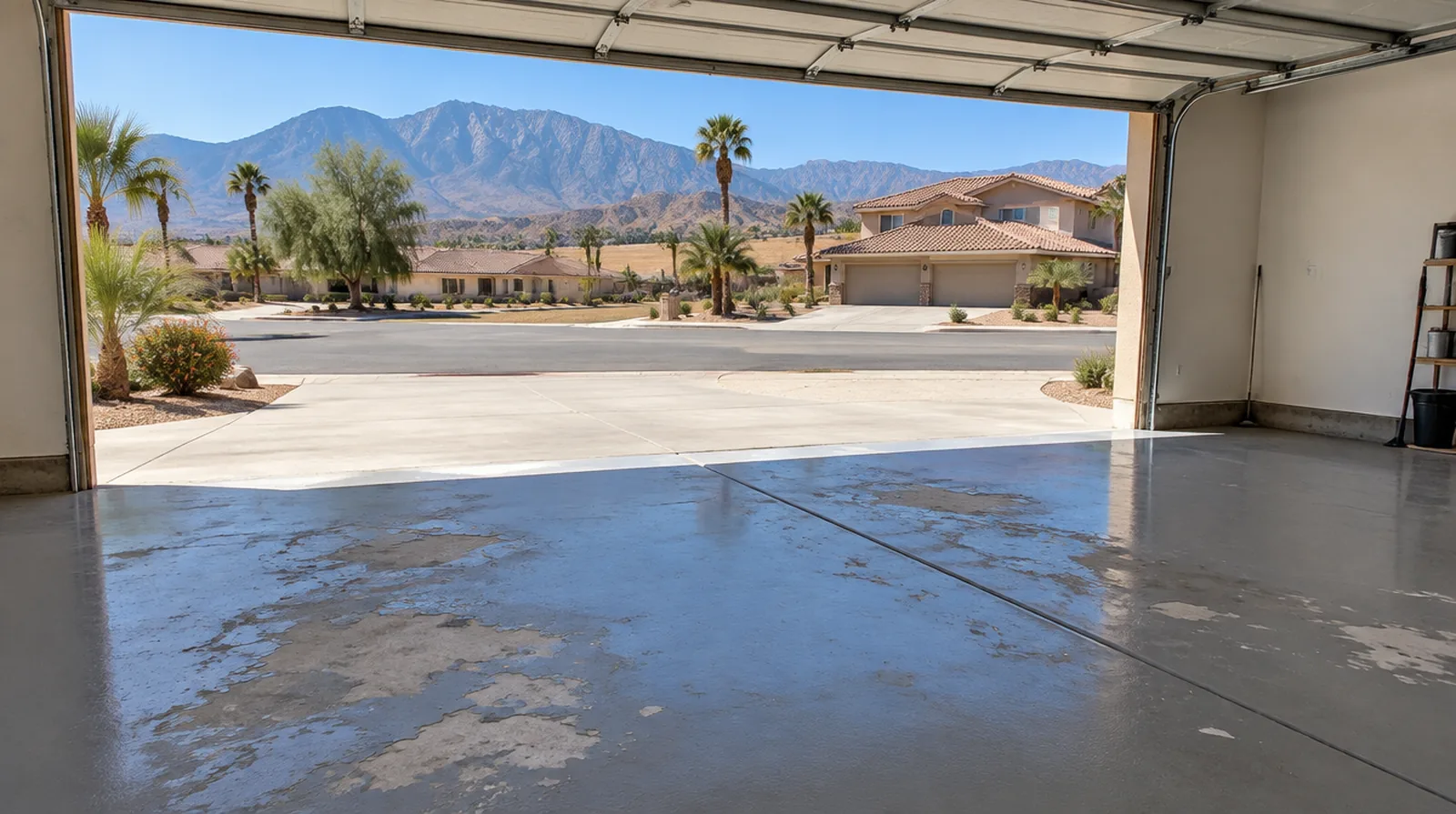
Why floors fail here
Many failed floors in newer neighborhoods share a cause: a DIY kit or thin paint was rolled over a smooth builder slab with a sealer still on top. Nothing bonded. Then summer arrived, hot tires softened the coating and patches lifted. Other failures come from moisture pushing up through the slab, from yellowed epoxy in sunny garages or from coatings too thin for heavy trucks.
Diagnosis first
We inspect and test before recommending a repair. Peeling under tires points to poor prep and heat. Bubbling across the floor points to moisture. Cracks through the coating follow slab cracks. Yellowing and chalking point to non-UV-stable products. We show you what we find.
Spot repair or replacement
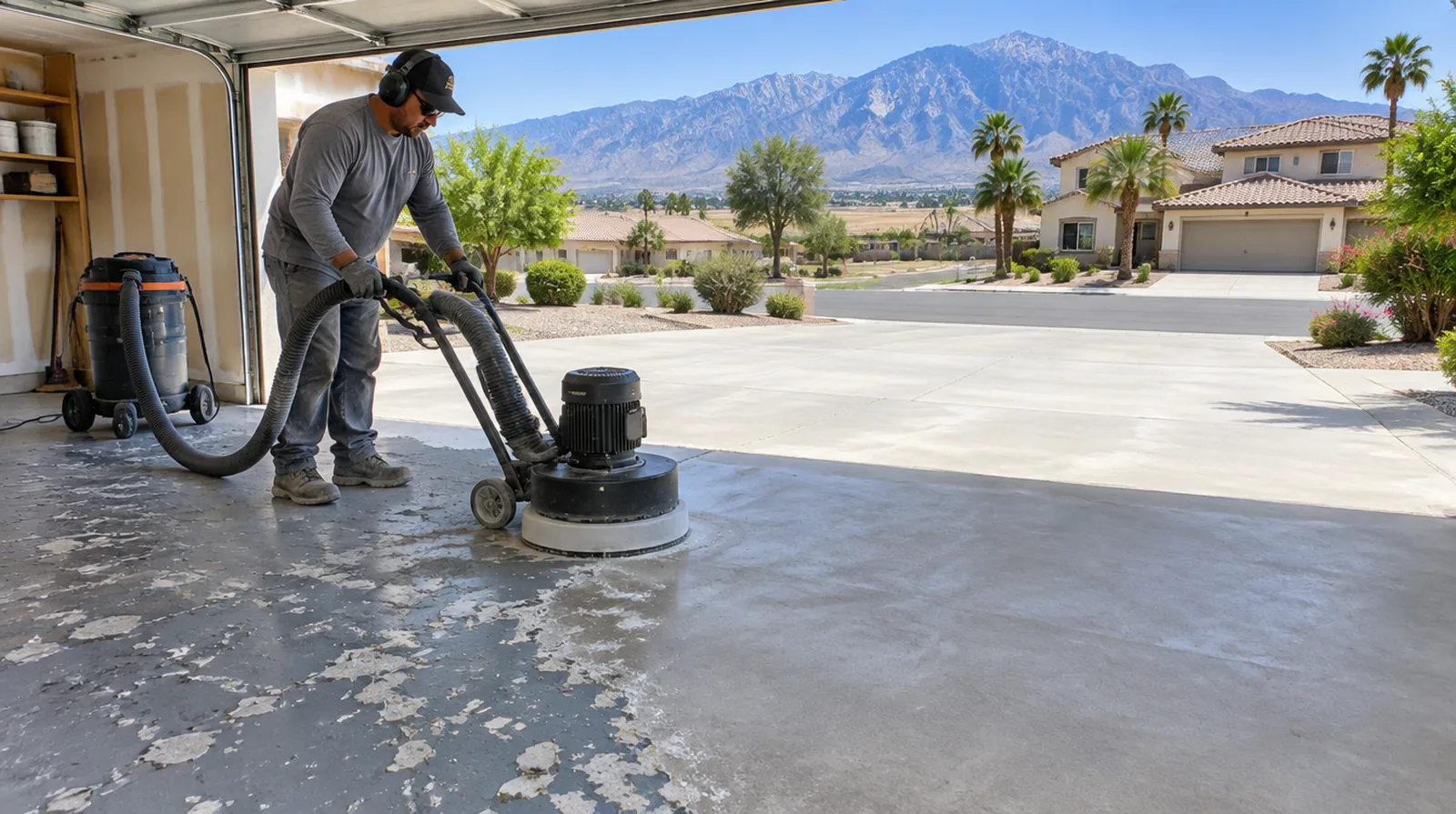
If most of the floor is well bonded, we cut out failed areas, grind, repair and rebuild. Flake floors blend repairs best. If the floor is failing widely, we grind it all off and install a new system with proper prep and a heat-resistant topcoat.
Removing old coatings
We use heavy diamond grinding with dust control to remove paint and epoxy down to clean concrete. Moisture issues get a mitigating primer.
Cracks and settling
Expansive soils in parts of the valley can cause slabs to shift and crack. We fill cracks with rigid or flexible materials depending on movement. Ongoing structural movement may need evaluation before coating.
Faded or yellowed floors
Floors that have amber tint or dull traffic lanes can often be restored with a light sanding and a new UV-stable topcoat.
Commercial repairs
We repair shop and warehouse floors in phases and after hours, using fast-cure products.
Preventing repeat failures
Grinding, moisture testing, quality products and a heat-resistant topcoat prevent most failures. Mats under cars and kickstands help.
Questions
Can you fix a DIY kit floor?
Usually it needs to come off, then we install a proper system.
How long does removal take?
Most garages are stripped and recoated in two to three days.
Will it peel again?
Not if the cause is fixed.
Floor peeling? Send photos or book a visit.
Sending photos first
Photos help us give useful advice before visiting. Take a wide shot of the floor, then close-ups of damaged areas with a coin or tape measure for scale. If the coating sounds hollow when tapped, mark those spots. Share the product name or installer if you know it. With that, we can often tell whether you need a spot repair, a topcoat refresh or a full replacement.
New home warranty questions
Some homeowners notice cracks or coating failures during their first year in a new home. If your builder offers a warranty, check what it covers before we start, since some repairs may be their responsibility. We are happy to document what we see with photos and notes so you have a clear record. When the builder is not responsible, we handle the repair and make sure it is done right.
Repairing shop floors
Older shop and barn floors often have deep pits, broken joints and oil-soaked areas. We clean and treat oil contamination, rebuild joints with semi-rigid fillers and patch pits with epoxy mortar before recoating. This restores a smooth, safe surface for carts, lifts and equipment.
Honest recommendations
We do not push full replacements when a smaller fix will work. If a topcoat refresh or a few spot repairs solve the problem, that is what we recommend. If the bond is failing across the floor, we explain why patching would only delay the inevitable and show you evidence from the inspection.
Timing repairs
Repairs are easiest in spring and fall, when slab temperatures are moderate. In summer we work early in the day. Most spot repairs take a single visit, and full replacements usually take two to three days including cure time.
Before any repair, we explain the expected lifespan and what maintenance will keep the floor healthy, so you know exactly what you are paying for and how long it should last.
Get a repair assessment
Call (951) 618-1370 for a free estimate.